Which documents should you gather before listing?
Keep one folder for ownership records, plans and transaction terms. Your chosen notary confirms the final list after reviewing the owners, family circumstances and property restrictions. Some items below help the buyer; you may not need to order each separately.
| Document or information | Where to look | Why it matters |
|---|---|---|
| Valid passport or identity card | Owner’s personal records | For all participants |
| Register extract and acquisition document | Centre of Registers, personal archive, notary | Ownership, property units and restrictions |
| Cadastral file and floor plan | Owner’s files, Register Centre, surveyor | Compare recorded area and layout with the home |
| Energy performance certificate | Construction Sector Development Agency (SSVA) register, certification expert | Check whether one exists and is suitable |
| Consents, powers of attorney and family-property details | Notary, owners, lender | As required by the ownership and family situation |
| Administration, renovation and utility-payment details | Administrator, owners’ association, providers | Discuss buyer costs and settle balances |
If selling a flat in Klaipėda, prepare the folder before viewings so you can answer buyer questions with documents, not guesses.
The register extract and acquisition document serve different purposes
Check owners and their shares, unique property numbers, designated use and registered restrictions in the extract. A purchase, gift or inheritance document shows how you acquired the property. Older files may not match the current register, so verify the latest details.
The Lithuanian Chamber of Notaries explains that a notary verifies the seller’s ownership and submits the information needed to register a certified transfer. Ask the office what it will obtain directly and which copies you should provide, so you do not order unnecessary records.
Check a basement store, shed, garage or parking space separately: using a space does not prove a right to sell it. Describe only what the documents cover; do not present shared space as separate property.
Does the flat plan match what a buyer will see?
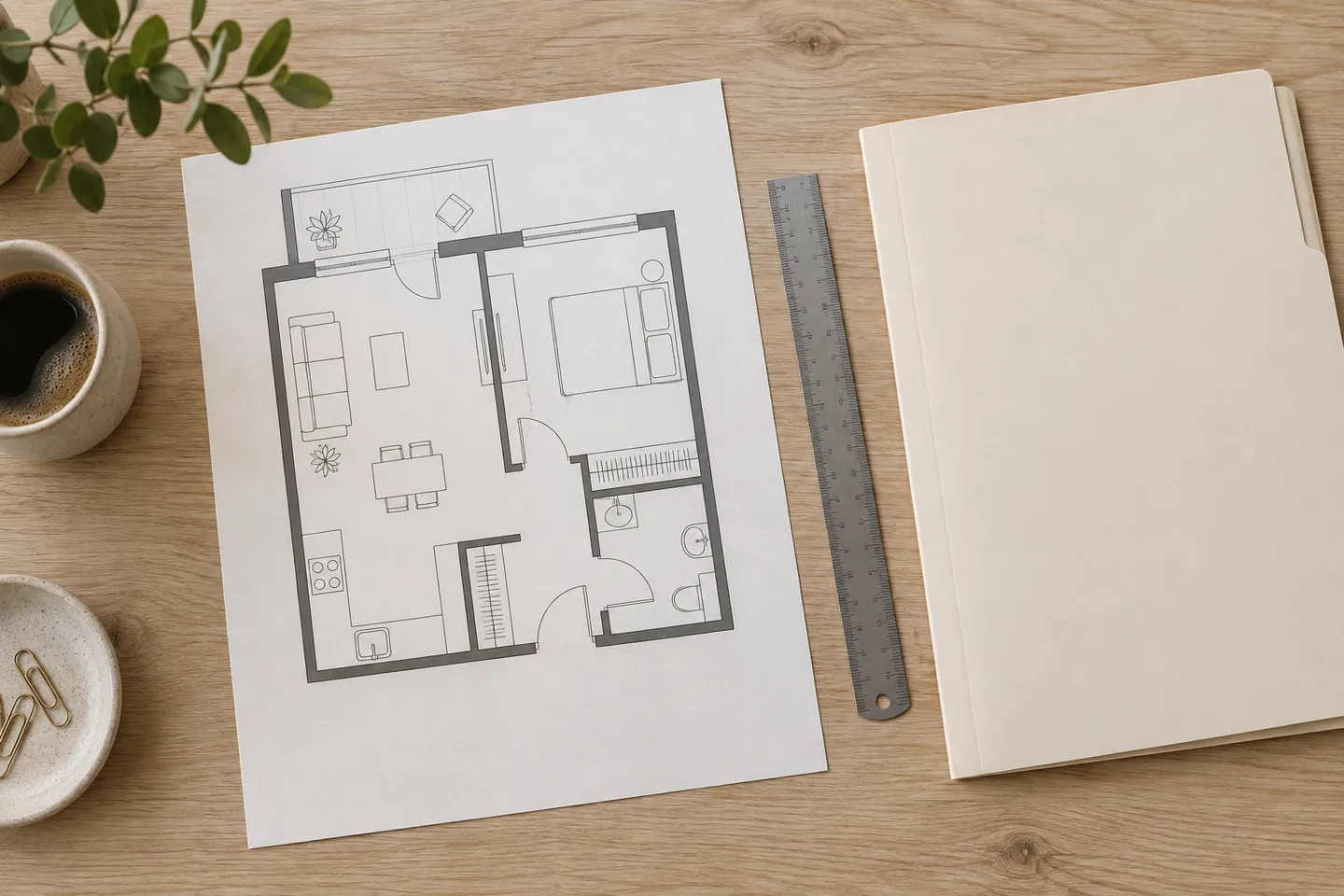
Walk through the flat with the plan. Note moved walls, a joined kitchen, changed heating or added space. This is a practical comparison, not a legal assessment; a new drawing alone cannot show whether past work needed a project, permit or other documents.
If details differ, gather renovation records and ask a designer or surveyor, as appropriate. The State Territorial Planning and Construction Inspectorate (VTPSI) consultation page separates construction from registration questions and points to the responsible authority. Set realistic transaction dates only after you know what needs attention.
Example: the living room looks spacious at a viewing, but the plan shows two rooms. Explain this and share your records before an advance is paid. See also what buyers should check before buying a flat.
Spouses, children and representation: what should you tell the notary?
Tell the notary when and how you acquired the home, whether it is the family residence and whether there are minor children. One spouse’s name on a document does not resolve every marital-property question. Under the Chamber of Notaries’ guidance, selling one spouse’s personal property classified as family property requires the other spouse’s written consent.
If there are minor children and the property is being sold as family property, give the notary information and evidence about their future living conditions and the family’s finances. Agree the document list with the office. If a representative will sign, confirm the power of attorney’s scope; if you live abroad, ask about recognition and translation.
Not sure what is missing from your property file?
Aleksandr Fedosejev can help plan a flat or house sale in Klaipėda and nearby areas, including the questions to raise with the notary. Start with the documents you have and your situation.
Discuss document preparationA house sale also involves the plot documents
Gather the plot plan, building cadastral records, and any construction permits and completion documents. Compare registered completion status and use with the actual condition. Check the basis for access, any easements and ownership of utility networks before promising the buyer use of all visible land.
For a house in Klaipėda District, also collect available well, wastewater and heating records, maintenance details and warranties. These help explain how the property operates; they are not a universal notarial requirement. Our guide to buying a house in Klaipėda District covers the buyer’s checks.
If selling a house in Klaipėda or nearby, document gaps can affect price and preparation time.

Energy certificate: first check what is already available
Before ordering a certificate, check the Construction Sector Development Agency (SSVA) registers and ask the administrator whether the whole block has one. The Ministry of Environment says a valid whole-building certificate can be used when selling a flat; a typical flat then needs no separate certificate. Ask the professional preparing the notarial documents to confirm that yours applies.
A heating bill or verbal claim about insulation is not a certificate. You may share bills separately, with their period and usage context. Use verified data in the listing.
Mortgage, outstanding balances and paperwork after the sale
Ask your lender for the terms of this sale: settlement amount, validity period and mortgage-discharge process. Set contract dates accordingly; do not promise the full price will go to your account. Follow the arrangement agreed with the lender and notary, not a generic online example.
Keep acquisition, sale and documented-expense records. The State Tax Inspectorate (VMI) says the relevant real-estate sale income exemption uses an ownership period of more than five years in 2026; declared-residence cases are assessed separately. Before estimating proceeds, check the tax conditions for a home sale.
At handover, record meter readings, keys, items left and outstanding payments. Give the buyer agreed operating instructions and keep copies of the transaction documents.
A preparation sequence that reduces last-minute questions
- List the units and owners; find the records you have.
- Compare extracts and plans with the home; note any gaps.
- Confirm missing documents with the notary and, if needed, the lender.
- Give the buyer checked information and review the draft agreement early.
The UK government seller guide also recommends gathering documents early; the US Consumer Financial Protection Bureau advises careful review before signing. These are organisational principles only: foreign legal requirements do not apply in Lithuania. A sale-preparation consultation can help set the order of work.
Questions and answers
Do I have to order every register extract myself?
Not necessarily. First ask the notary’s office what it can obtain from the registers. Your extract can help you prepare, but an old copy may not show the current position. Order additional records only after agreeing what is needed.
What if I cannot find the purchase agreement?
Tell the notary and provide the approximate transaction date and certifying office, if known. Ask the notary or Centre of Registers where the copy is held and how to request it. Not finding the agreement at home does not by itself mean you lack ownership rights.
Do I need a new cadastral file just because I am selling?
No. First compare the file with the current property and identify any changes. If they differ, a surveyor and, if needed, a designer can advise what steps are required. Do not order a new survey solely because the existing document is old.
Should I order a separate certificate for a renovated apartment block?
First ask the administrator and check the SSVA register. A valid whole-building certificate may be used when selling a flat. Renovation alone does not replace the document, so find it and check its validity. Confirm it suits the sale before ordering another service.
Do I always need court permission if I have children?
No; that is not a universal rule. When family property is sold, the notary assesses minor children’s housing interests from the information and evidence provided. If a child owns a share or circumstances are unusual, discuss the case with the notary in advance.
Is an administrator’s certificate required for every sale?
No single certificate set applies to every transaction. Ask the notary what this sale requires. It is useful to know any utility and renovation balances and agree how to settle them. The buyer should also understand regular future costs.
What should I check about a house extension in the documents?
Compare it with the cadastral plan, register and available construction documents. If they differ, ask a specialist about the construction and registration steps for this property. A new measurement alone does not confirm the work was lawful. Tell the buyer before agreeing on an advance.
Turn your document checklist into a sale plan
Talk with Aleksandr Fedosejev about presenting your home, preparation work and a free preliminary price assessment for a flat or house. Clear starting information helps plan the next steps.
Arrange a sale consultationSources and further reading
- Lithuania’s Chamber of Notaries (Lietuvos notarų rūmai): notarial functions
- Centre of Registers: register extract
- State Territorial Planning and Construction Inspectorate (VTPSI): consultation responsibilities
- Construction Sector Development Agency (SSVA): registers
- Ministry of Environment: changes to energy certification
- State Tax Inspectorate (VMI): income from selling real estate
- UK government: Preparing to sell
- US Consumer Financial Protection Bureau: Closing on your new home
Images are AI-generated illustrations. They do not show specific properties for sale or NTIQ clients.